WASH R&D Centre
Applied research · Water & sanitation

Municipal Support Programme

Nine modular service areas that put WASH R&D Centre research to work inside a municipality, across the Stabilise, Recover and Transform reform path.
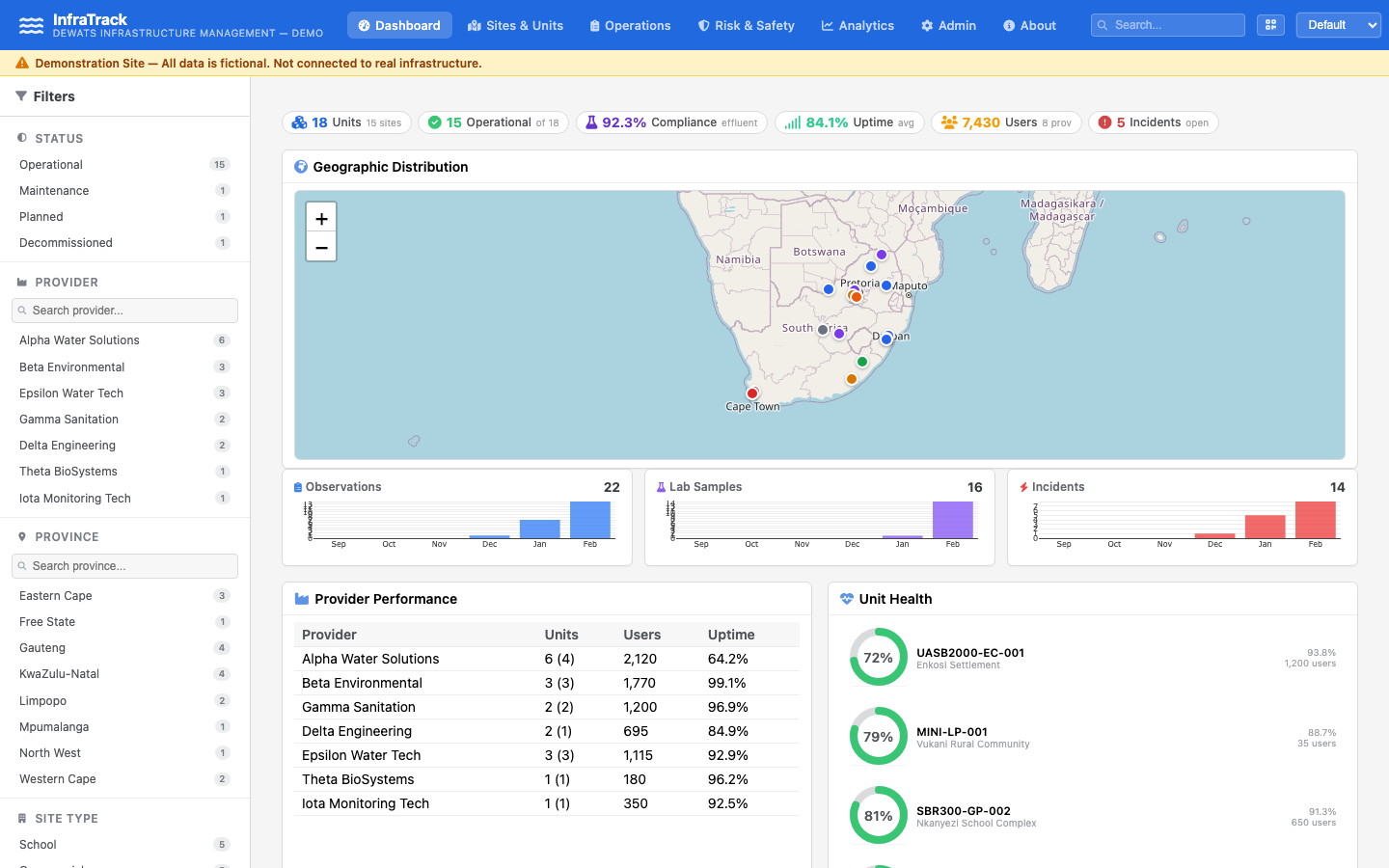
InfraTrack platform
30+
Researchers
9
Service areas
20+
Years partnership
50+
River systems
WASH Research & Development Centre · University of KwaZulu-Natal · July 2026
The programme

Purpose and scope

The Municipal Support Programme is the route by which research at the WASH R&D Centre reaches municipalities as practical, procurable support. It consolidates nine programme areas, from river-health intelligence to community readiness, into a single offering that a water and sanitation department can adopt as a whole or draw on module by module.

Each area is a modular programme. It can be activated on its own or in combination, and every engagement is scoped against the municipality's own position on the national reform path.

The design principle throughout is that support should leave capability behind: trained engineers who remain with the municipality, accredited laboratories, embedded platforms and data the municipality owns, rather than a standing dependency on the WASH R&D Centre.

WASH Centre work runs a single pipeline in every unit. Fundamental research generates new methods; innovation turns them into reproducible tools, protocols and platforms; service delivery puts those tools in front of municipalities. The Municipal Support Programme is the service stage of that pipeline. Delivery is by the WASH R&D Centre, with commercial service delivery through WASH Innovate (Pty) Ltd, the UKZN spin-off registered in June 2026.

Researchnew methods
→
Innovationtools & platforms
→
Servicemunicipal delivery

Four functional units

WESS — engineering de-risking
Non-sewered sanitation validation and standards
Circular Economy
Resource recovery from waste streams
Water Resource Management
Sensing, GIS, non-revenue water
Health & Hygiene
Pathogen monitoring, early warning

Deployed platforms

InfraTrack
Infrastructure management
Unit-Health
River & coastal health
Spot of Green
Satellite leak detection
WESStrack + SenseArray
Installation tracker + sensor telemetry

Anchor partnerships

UKZN–WRC MoA
R 20m / 5 years
eThekwini Water & Sanitation
R 10.5m / 3 years, in renewal
SALGA framework MoU
In negotiation — national routing
WASH R&D Centre · University of KwaZulu-NatalMunicipal Support Programme
How engagements are scoped

Alignment with the municipal reform model

South African municipalities are implementing water and sanitation turnaround strategies on a three-phase national reform model. The nine programme areas are structured to support a municipality across all three phases, and a single engagement typically draws on three or four units at once.

Stabilise
  • Emergency diagnostics
  • Real-time data dashboards
  • Quick-win interventions
  • Baseline assessments
Recover
  • Technology deployment
  • Staff training programmes
  • System integration
  • Performance benchmarking
Transform
  • AI-driven platforms
  • Institutional embedding
  • Revenue generation
  • Long-term sustainability
The role of SALGA. SALGA facilitates the connection between the WASH R&D Centre and municipalities. Through the framework MoU it identifies municipalities, coordinates introductions, and supports partnership agreements scoped to each municipality's requirements.
Engaging the programme

Three steps to a live engagement

1
Scope
A Stabilise-phase diagnostic in one area, most often river health, InfraTrack or non-revenue water, establishes the baseline.
2
Deploy
Platforms, sensors and training are deployed, and municipal staff are embedded alongside Centre engineers.
3
Embed
Capability transfers to the municipality: trained engineers, accredited laboratory, owned data and a standing rating.
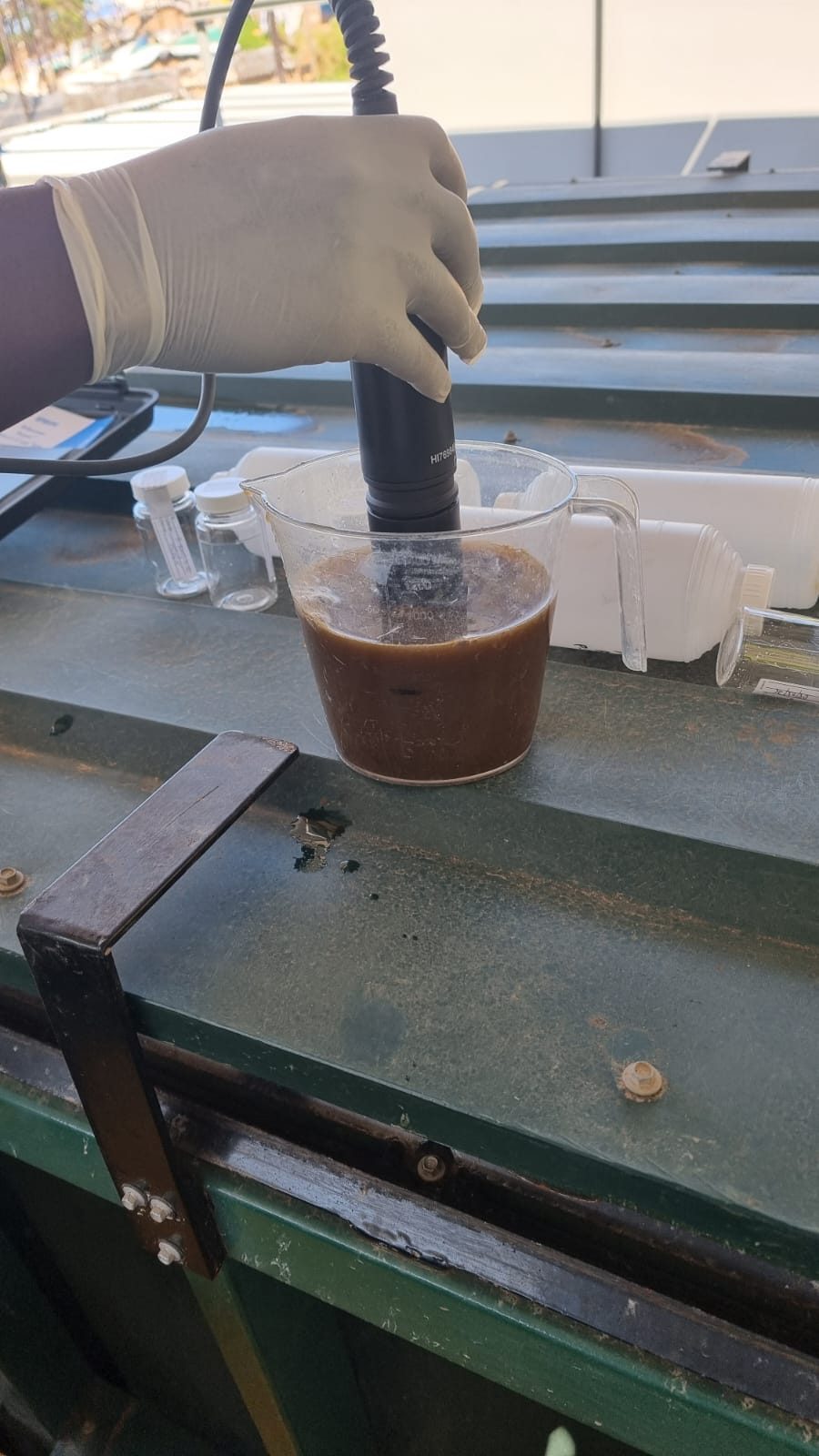
Field measurement
Field measurement at a demonstration site — the evidence layer beneath every engagement.
WASH R&D Centre · University of KwaZulu-NatalMunicipal Support Programme
The nine programme areas
1
Real-time monitoring & predictive analytics

River & Coastal Health Intelligence

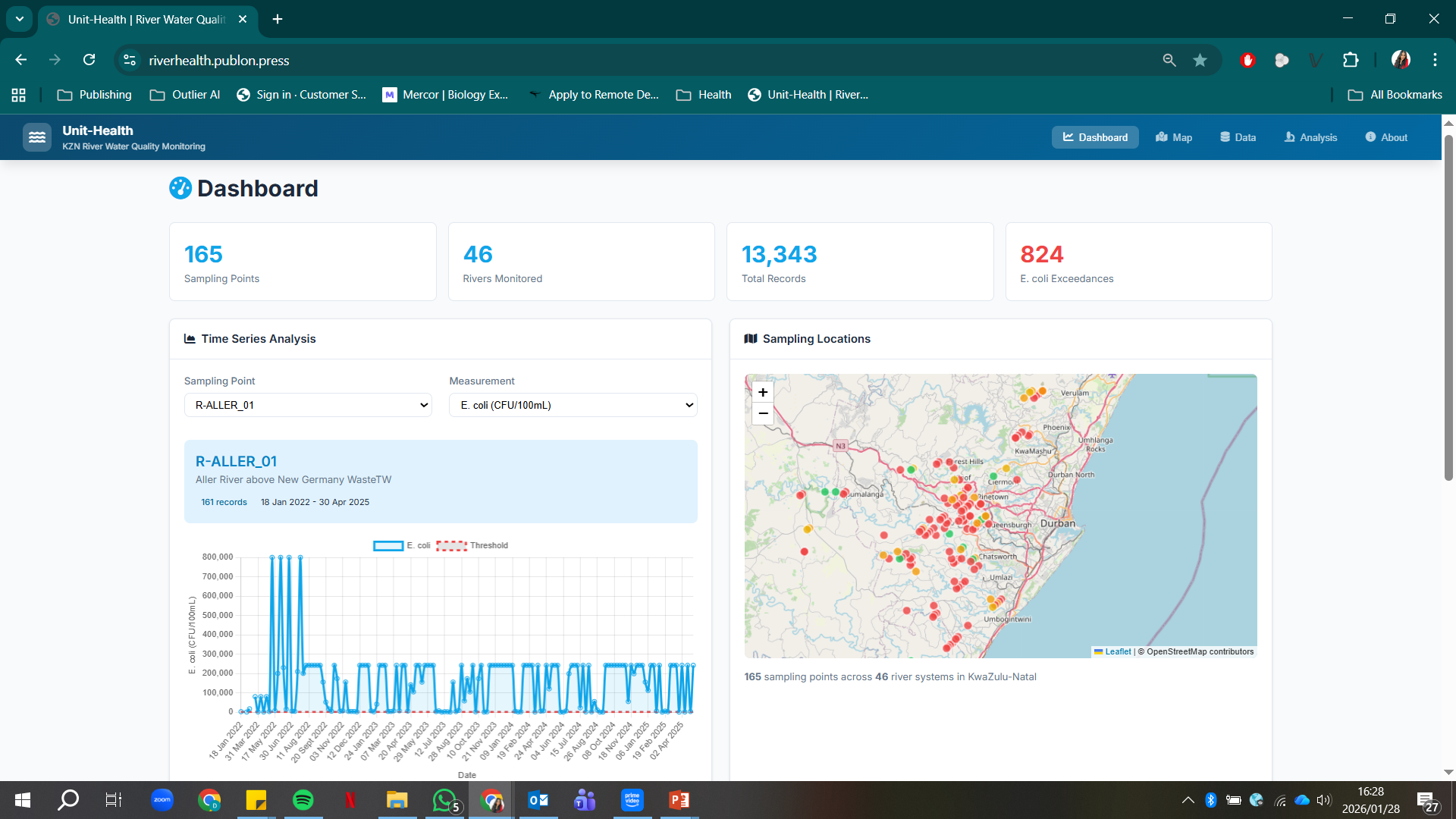
Unit-Health
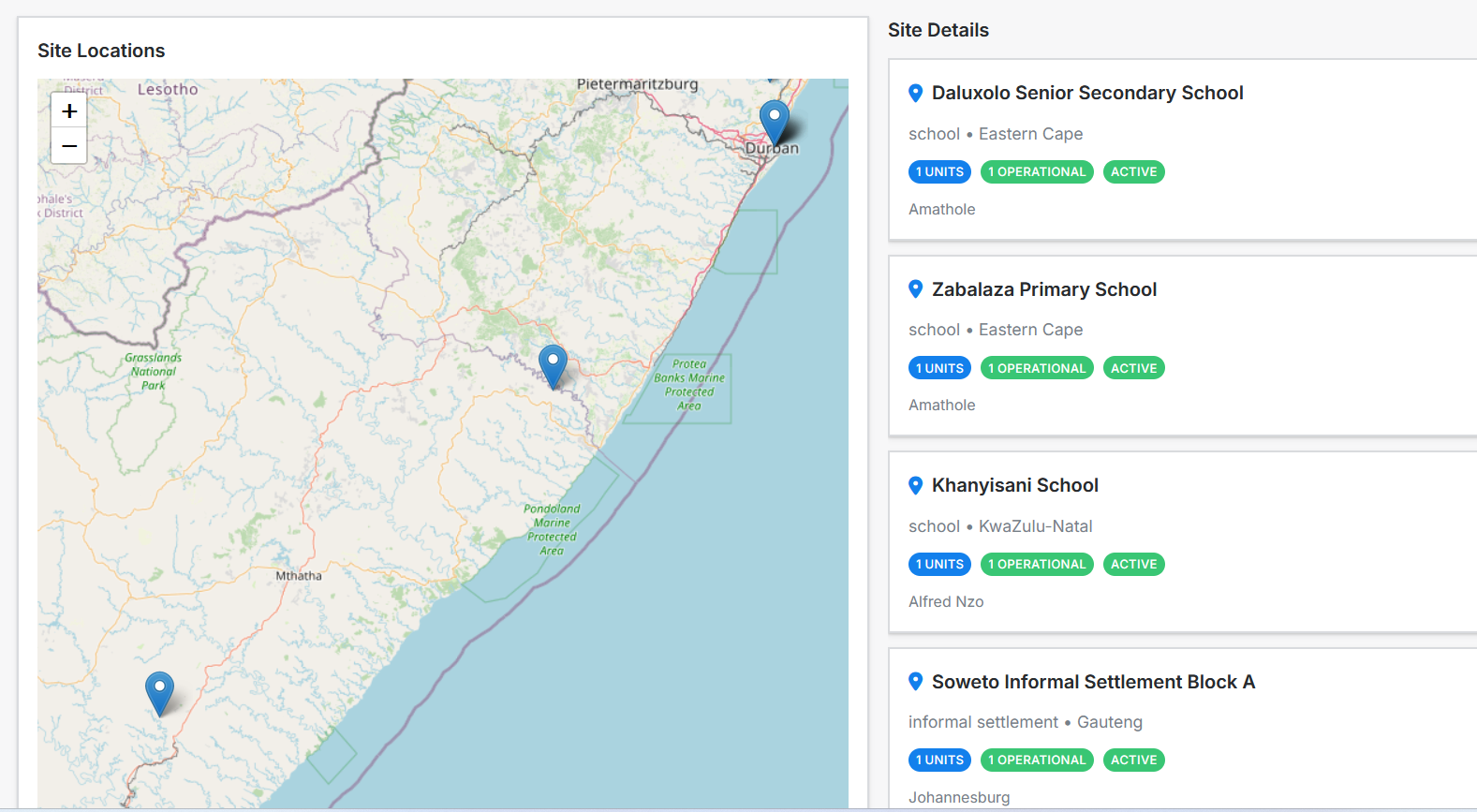
Unit-Health: live river-water-quality across KwaZulu-Natal.
  • Real-time dashboards, GIS maps and colour-coded risk across 165+ sampling points
  • Predictive E. coli modelling (LSTM / XGBoost) without sole reliance on laboratory results
  • Digital-droplet PCR pathogen monitoring: E. coli, Campylobacter, rotavirus, norovirus
  • Diarrhoeal-Disease Early-Warning System linking river data to community health
50+
River systems
165+
Sampling points
10
Parameters
24/7
Monitoring
Municipal relevance. Continuous prediction supplements periodic sampling, and supports Blue/Green Drop compliance and environmental-governance reporting.
2
IoT sensors, satellite & data platforms

Smart Sensing & Digital Infrastructure

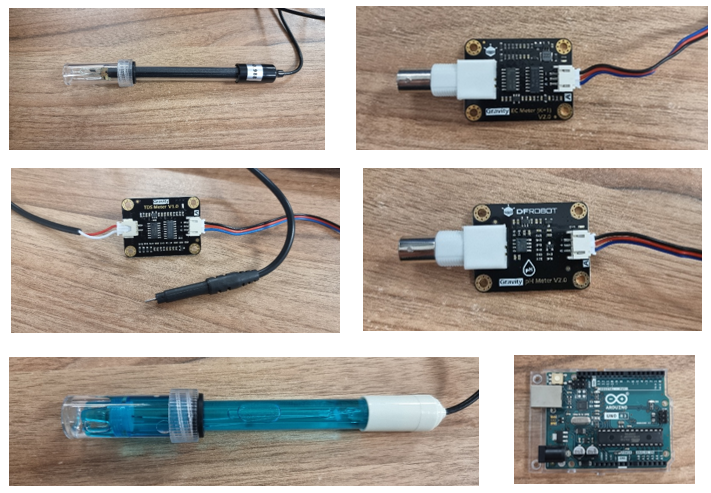
IoT sensor nodes
Purpose-built low-cost IoT sensor nodes.
  • Low-cost IoT nodes. Turbidity, chlorine, pH, temperature, ammonia, conductivity at 70–90% field accuracy (SenseArray)
  • Retrofitted upgrades. IoT added to existing points without replacing infrastructure
  • ESA satellite monitoring. Sentinel-1 SAR for leak detection; Sentinel-2 optical for turbidity and sewage plumes
  • Centralised platform. All streams feed InfraTrack for AI-assisted decisions
70–90%
Field accuracy
8+
Parameters
3
Sensing layers
ESA
Satellite
Municipal relevance. Real-time visibility enables proactive failure detection, and satellite coverage spans the municipality without full infrastructure replacement.
WASH R&D Centre · University of KwaZulu-NatalProgramme areas 1–2
The nine programme areas
3
Cloud-hosted, eight integrated modules

InfraTrack — AI-Assisted Infrastructure Management

InfraTrack GIS
Asset management with GIS: every installation mapped and profiled.
  • Asset registry + AI scoring. Unit Health Scoring (0–100) with prioritised improvement roadmaps
  • Compliance dashboards. Automated SANS 241, Blue/Green Drop, MFMA and ISO 30500/31800 reporting
  • HAZOP risk & suitability. 5×5 risk matrices and a site–technology matching engine
  • Economic evaluation. CAPEX and lifecycle-cost dashboards; data ownership stays with the municipality
8
Modules
0–100
Health score
Cloud
Managed service
SANS 241
Built in
Municipal relevance. A managed service that removes separate platform procurement and supports data-driven governance and cross-asset benchmarking.
4
Satellite, consumption intelligence, metering

Non-Revenue Water Analytics & Leak Detection

Spot of Green satellite
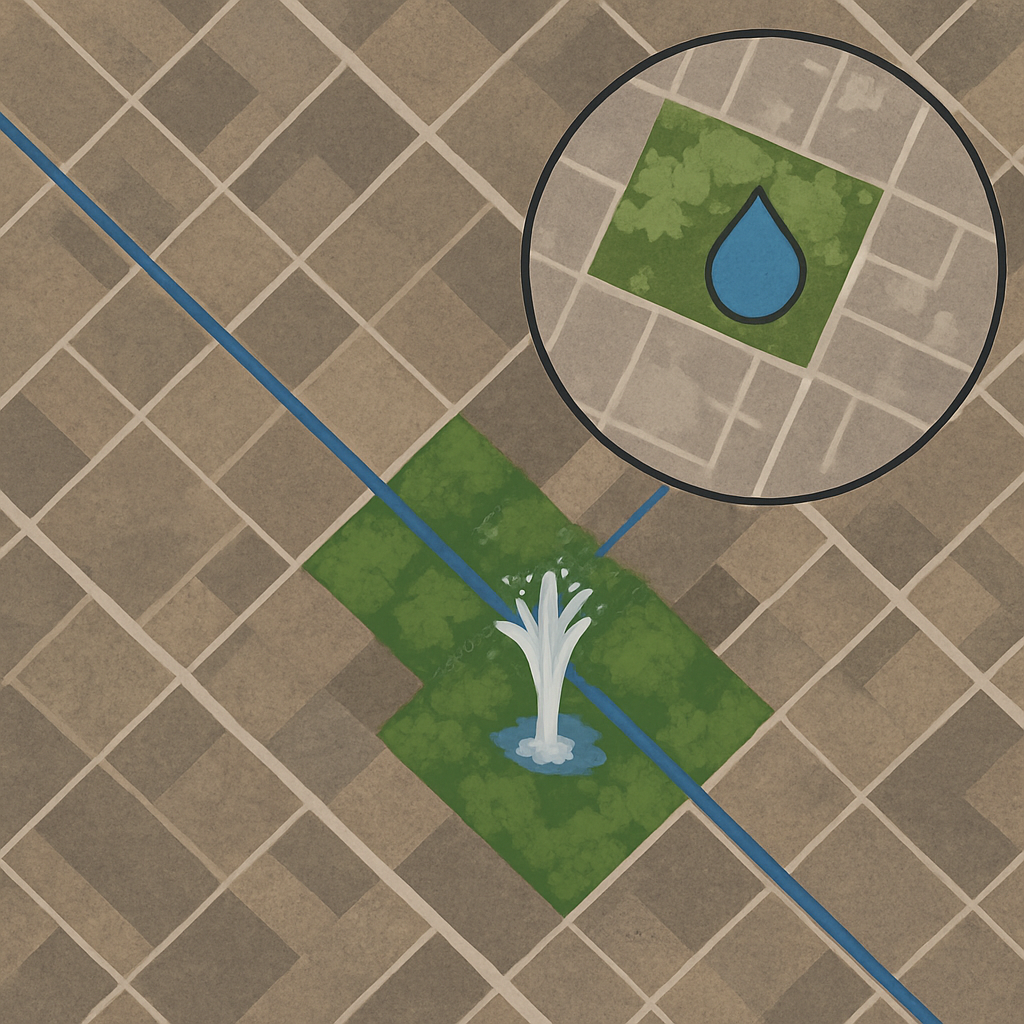
Spot of Green: NDVI anomalies reveal subsurface leaks from space.
  • Satellite leak detection. NDVI analysis catches chronic leaks that acoustic methods miss
  • Consumption intelligence. Flags highest consumers, bypass indicators and tampering signatures from billing data
  • Smart-metering retrofits. Low-cost IoT modules on existing mechanical meters
  • Zone-level DMA analytics. High-loss zones prioritised by revenue-recovery potential
>50%
Typical NRW loss
Satellite
Leak detection
DMA
Zone analytics
Retrofit
Smart metering
Municipal relevance. Existing billing data is mined for revenue recovery with no new hardware, and field investigations are prioritised by value.
WASH R&D Centre · University of KwaZulu-NatalProgramme areas 3–4
The nine programme areas
5
Resource recovery from waste streams

Circular Economy & Resource Recovery

Biochar gasifier
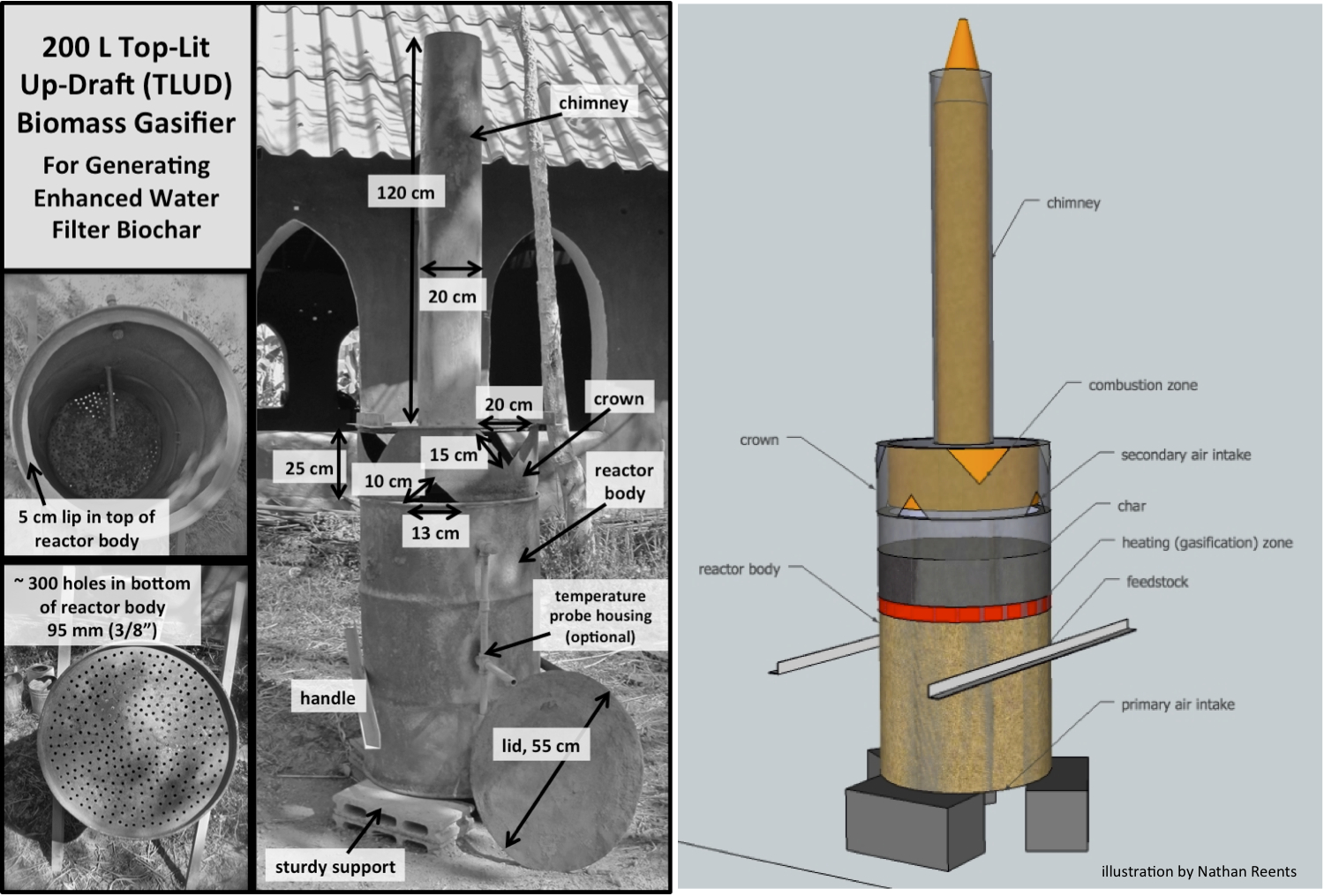
A 200 L TLUD gasifier: municipal sludge to agricultural biochar.
  • Pyrolysis to biochar with CO₂ channelled into greenhouses; fry-drying of sludge to briquettes
  • Drum composting in six weeks, against sixteen conventionally
  • Waste-to-wall SANS-compliant bricks; urine-to-fertiliser (VUNA)
  • Emerging-contaminant screening (HPLC-SPE) confirms product safety
6
Recovery paths
6 wk
Fast compost
SANS
Compliant
CERR-HUB
Newlands-Mashu
Municipal relevance. Recovery pathways offset disposal costs through agricultural, construction and energy products, all demonstrated at Newlands-Mashu.
6
Validation, ISO compliance, SANAS accreditation

Non-Sewered Sanitation De-Risking & Standards

WESStrack national map
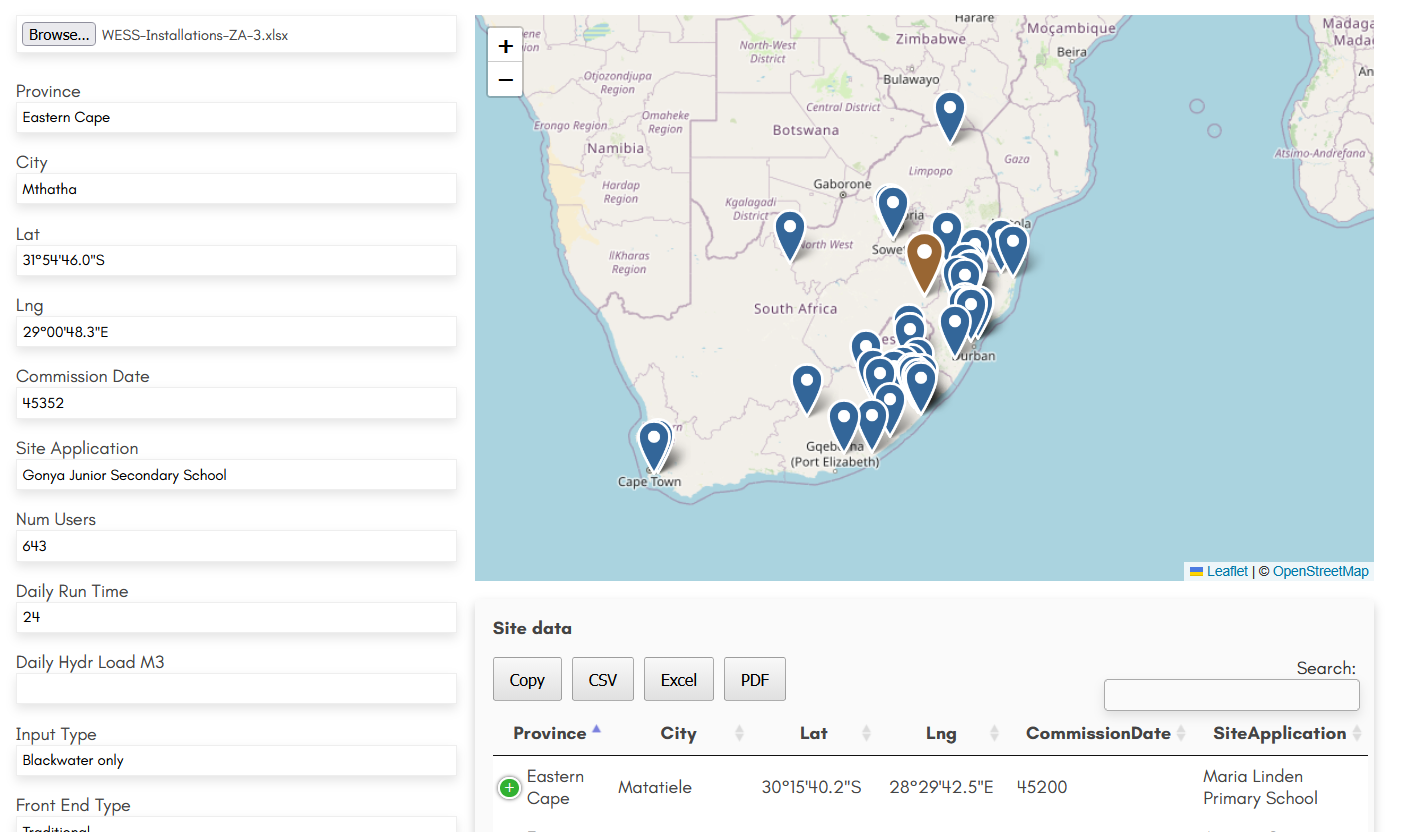
WESStrack: the national installation map, by status and provider.
  • Three-phase de-risking. Laboratory → field validation with live monitoring and HAZOP → operational integration
  • WISE framework. Levels 0–4 across six domains, from water efficiency to operability
  • ISO 30500/31800 testing. Effluent quality, pathogen reduction, structural integrity
  • SANAS accreditation support for the Centre and municipal laboratories
3
Phase process
ISO
30500/31800
0–4
WISE levels
SANAS
Accreditation
Municipal relevance. Evidence-based technology procurement: systems evaluated against international safety standards before deployment.
WASH R&D Centre · University of KwaZulu-NatalProgramme areas 5–6
The nine programme areas

Capability, community and demonstration

🎓
Area 7 · Engineer training & knowledge transfer

Capacity Building & Training

  • 12-month placement of 2 graduate engineers per year across blended Centre and municipal operations
  • Bidirectional staff exchange, joint SANAS accreditation and municipal-laboratory internships
  • At least four CPD short courses a year; quarterly briefings and an annual symposium
6 trainee engineers4+ courses / yrQuarterly briefings
🤝
Area 8 · Stakeholder engagement & acceptance

Social Assessment & Community Readiness

  • Community-readiness assessments: baseline surveys, focus groups, key-informant interviews
  • Stakeholder mapping, liaison SOPs and social-acceptance monitoring feeding InfraTrack
  • Social-impact evaluation across well-being, livelihoods and gender dynamics
5 assessment domainsLiaison SOPsGender analysis
Unit internals
Area 9 · Pilot sites & demonstration

Site Development & Demonstration Infrastructure

  • Pilot-site setup: infrastructure planning, equipment installation, commissioning
  • Security, access control, on-site laboratory space and H&S compliance
  • Newlands-Mashu is the reference implementation for the Circular Economy Research Hub
Field-testedOn-site labTraining-ready
WASH R&D Centre · University of KwaZulu-NatalProgramme areas 7–9
Flagship · commercial development

WESS de-risking as a financeable instrument

Programme area 6 has been carried furthest toward commercial service. The engineering de-risking engagement is finalised as a formal framework, the WESS Engineering De-Risking Programme (v5, June 2026), and is moving from a one-off report to a standing service.

A≈ prime − 3.0 pp
Bpartial concession
Cwatch
Dremediation
The field basis is a first cohort across five household-scale units and three providers, including Enviro Options (Enviro Loo Clear) and the WEC NEWgenerator, with ongoing monitoring at the Pholani demonstration site. Under the WESP programme this expands from 12 sites to a 27-site programme in Phase 2.
WASH R&D Centre · University of KwaZulu-NatalWESS engineering de-risking
Delivery model

Two tracks, one programme

Research track — UKZN Centre

Grant-funded research and public-good work, covering standards, policy and postgraduate training, continue as UKZN Centre activities under existing grant agreements.

Commercial track — WASH Innovate

Platform licensing, de-risking subscriptions and evaluator fees run through WASH Innovate (Pty) Ltd, which operates deployed technology under licence while UKZN retains ownership of the intellectual property.

Engagements can be activated individually or in combination. A municipality can start with a single Stabilise-phase area and expand into Recover- and Transform-phase work as capability builds. Nationally, SALGA routes and scopes engagements through the framework MoU; directly, engagements are contracted against reference deployments such as those under the eThekwini MoA.

The nine programme areas at a glance
1 River & Coastal Health Intelligence
2 Smart Sensing & Digital Infrastructure
3 InfraTrack Infrastructure Management
4 Non-Revenue Water Analytics
5 Circular Economy & Resource Recovery
6 Non-Sewered Sanitation De-Risking
7 Capacity Building & Training
8 Social Assessment & Readiness
9 Site Development & Demonstration

WASH Research & Development Centre

University of KwaZulu-Natal · Howard College Campus, Durban, South Africa
washcentre.ukzn.ac.za  ·  [email protected]
+27 (0)31 260 3375 / 2702

Consolidates the WASH Centre Services Brochure (2026) and the Incorporation Case Annex A (May 2026), updated with the July 2026 de-risking, WASH Innovate and WESP Phase 2 developments.

WASH R&D Centre · University of KwaZulu-NatalJuly 2026